Requirements
Before you begin, take into account the following requirements.Dispute flow overview
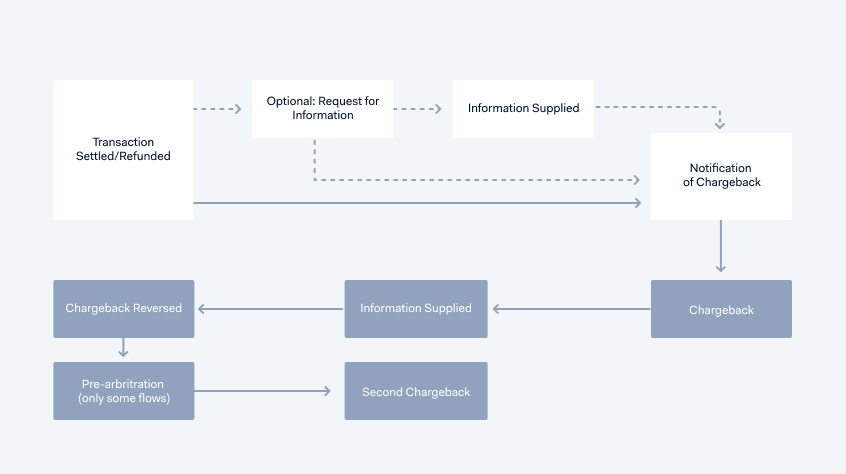
The dispute flow can differ between card schemes and payment methods, but the general flow is the same for most. A chargeback takes place when a cardholder disputes a payment and asks their issuing bank to reverse it. To charge back the payment, the bank submits a formal dispute on behalf of the cardholder. Adyen processes the chargeback and debits the payment amount and the chargeback processing fee from your account. The dispute flow starts. You can accept or defend the chargeback using the Customer Area or the Disputes API. If you defend the chargeback, you have to provide documents to support your defense. The issuing bank reviews the information you supply and accepts or declines your defense. If the issuer accepts your defense, or if the cardholder cancels the chargeback, the funds will return to your account. You can follow the dispute flow by monitoring the dispute in your Customer Area, and by listening to webhook messages. To monitor overall dispute performance, such as win and loss rates, you can use the Risk & dispute management dashboard. The following diagram illustrates the flow of a dispute: